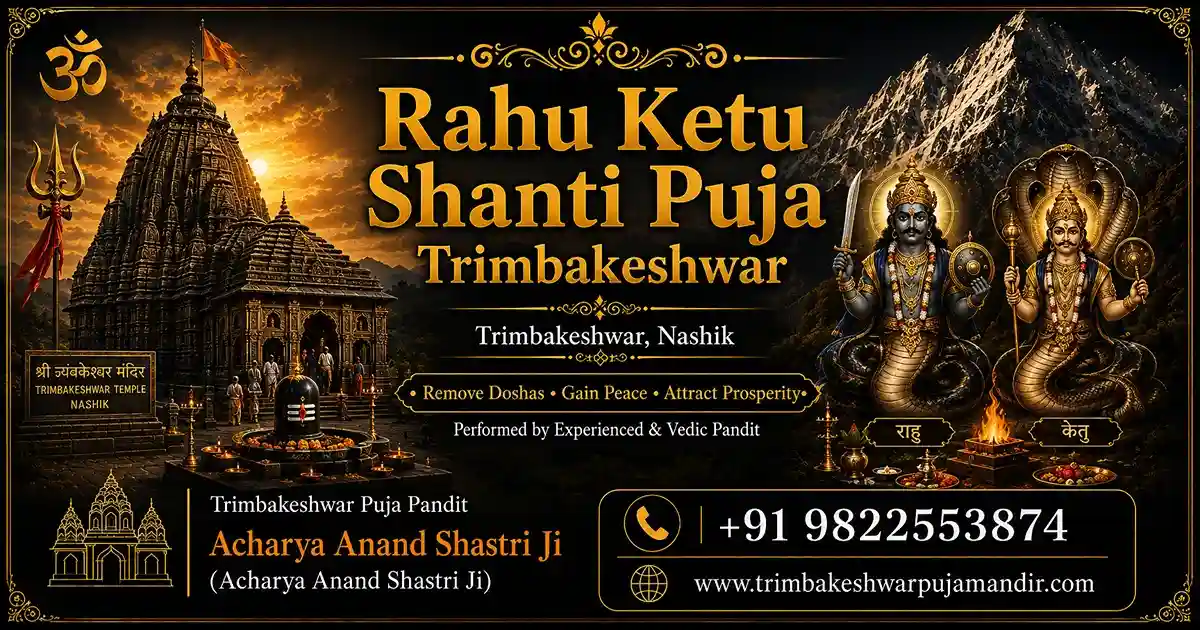
Rahu Ketu Shanti Puja Trimbakeshwar: What Actually Happens When You Book It
Most articles about Rahu Ketu Shanti Puja Trimbakeshwar read the same way — a list of symptoms, a mantra, a table of benefits, then a phone number. What they skip is the part people actually ask us once they’ve decided to come: what does the day itself look like? Do I need to fast? How long does it take? Is my child allowed to sit through it?
This guide answers that. If you’ve already read about what Rahu and Ketu do astrologically and you’re past the “should I do this” stage, here’s what a Rahu Ketu Puja Trimbakeshwar visit genuinely involves, from the night before to the drive home.
Who Actually Ends Up Booking This Puja
Not everyone who books Rahu Ketu Shanti Puja Trimbakeshwar arrives with a horoscope in hand. Some do — an astrologer has flagged a Rahu-Ketu Mahadasha or malefic placement and sent them here specifically. But just as many arrive because life has been stuck in a pattern they can’t otherwise explain: a job that keeps falling through at the final stage, a relationship that stalls right before commitment, a run of bad luck that doesn’t match the effort being put in.
Both groups end up doing the same ritual, for the same reason — Rahu and Ketu operate on what Vedic tradition calls a karmic layer, one that doesn’t always show up as a clean line item in a birth chart reading. If you’re unsure whether your situation qualifies, that uncertainty itself isn’t a reason to skip it. Priests here regularly perform this puja for people who came without a formal chart analysis, based on the pattern of what they’ve been experiencing.
The Night Before: What to Actually Do
If you’re staying in Nashik or Trimbakeshwar the evening before your puja, keep it simple:
- Eat light — this isn’t a mandatory fasting ritual, but a heavy meal the night before makes the early start harder than it needs to be
- Lay out modest, traditional clothing rather than deciding that morning
- If you’re bringing family members being included in the sankalp (the dedication), have their full names, gotra (if known), and birth details written down — the priest will ask for this at the start
Most families booking Rahu Ketu Shanti Puja Trimbakeshwar underestimate how early the day starts. Arriving groggy and rushed changes the whole tone of the morning, so treat the night before as part of the ritual, not just logistics.
The Morning: Bathing, Sankalp, and the Wait
The day typically begins with a ritual bath, often at Kushavarta Kund, where the Godavari is believed to originate. This isn’t optional in most versions of the ritual — purification before approaching Lord Shiva is treated as the first real step, not a formality.
After the bath, you’ll meet your priest for sankalp — a short but important part where he formally states your name, family lineage, and the specific purpose of the puja out loud. This is the moment the ritual becomes personal rather than generic. If you’re doing this for a family member who isn’t present, this is also when their details get incorporated.
Then comes what most first-timers aren’t warned about: waiting. A Rahu Ketu Puja Trimbakeshwar visit isn’t a private, one-family ceremony unless you’ve specifically arranged it that way — priests often work through several families across the morning, and your exact start time depends on the day’s queue. Bring water, bring patience, and don’t schedule anything tightly afterward.
What the Ritual Itself Involves
Once your turn comes, a Rahu Ketu Shanti Puja Trimbakeshwar ceremony moves through five distinct stages, each building on the one before it rather than standing alone.
The first stage is Kalash Sthapana. A sacred pot is set up to represent the seat of the planets, and this is where the ritual physically begins — before any mantras start, the priest establishes the space itself as sacred ground. It’s a quieter moment than people expect, more setup than spectacle.
The second stage is Navagraha Pujan. Brief worship is offered to all nine planets, not just Rahu and Ketu, to keep the overall birth chart balanced rather than fixing one problem while ignoring the rest of the astrological picture. This is one of the details that separates a properly performed Rahu Ketu Shanti Puja Trimbakeshwar ritual from a shortcut version — the whole chart gets acknowledged, even briefly.
The third stage is Mantra Japa, the part most people picture when they think of this puja. Chanting specific to Rahu and Ketu begins here, sometimes carried entirely by the priest, sometimes with you repeating along under his guidance. This stage tends to run longer than the others and is where most devotees describe the first real shift in how they’re feeling.
The fourth stage is Havan, the fire ritual. Ghee, black sesame seeds, and other offerings are placed into a sacred fire while the mantras continue, and the atmosphere changes noticeably here — smoke, heat, and a much more active rhythm than the earlier, quieter stages.
The fifth and final stage is Aarti and closing. Final prayers are offered, prasad is returned to you, and often sacred ash (vibhuti) is given to take home. This is also when the priest typically offers any specific guidance for what to do — or avoid — in the days following.
The full sequence usually runs a few hours depending on how many people are ahead of you and whether it’s combined with another ritual like Kaal Sarp Dosh Puja on the same visit. It’s more physically demanding than people expect — a lot of sitting, some kneeling, sustained attention — so wear something you can actually sit in comfortably for that long.
Rahu vs. Ketu: Why the Puja Treats Them Differently
One thing that often gets flattened in generic articles: Rahu and Ketu aren’t treated identically during the ritual, because they aren’t causing the same kind of trouble.
Rahu tends to show up in a person’s life as restlessness — chasing something without knowing why, sudden ambition that burns out, decisions made from fear rather than clarity. Ketu tends to show up as the opposite — detachment that goes too far, unexplained losses, a sense of disconnection from things that used to matter. A well-performed Rahu Ketu Shanti Puja Trimbakeshwar visit addresses both sides of that axis, not just whichever one feels more obviously “the problem” at the time.
This is part of why priests here often ask a few questions before starting, rather than jumping straight into a fixed script — the emphasis shifts slightly depending on which side of the Rahu-Ketu axis is causing more visible disruption in your life right now.
How This Fits With Your Other Puja Options
Families rarely come to Trimbakeshwar for just one ritual. If you’re already planning a Rahu Ketu Puja Trimbakeshwar visit, it’s worth knowing how it connects to the other pujas performed here, so you can decide whether to combine them in one trip.
Kaal Sarp Dosh Puja is the closest relative to this ritual — it’s performed when every planet in the chart is trapped between Rahu and Ketu, rather than just one of them being malefic. Many families booking Rahu Ketu Shanti Puja Trimbakeshwar are actually dealing with a Kaal Sarp configuration and end up doing both in the same visit for a more complete correction. Details: Kaal Sarp Dosh Puja.
Pitru Dosh Puja addresses a different but sometimes overlapping issue — unsettled ancestral energy rather than planetary imbalance. If your family history includes unresolved ancestral matters alongside the career or relationship stagnation that brought you here, it’s common to book both. Details: Pitru Dosh Puja.
Mahamrityunjay Puja is usually added when health concerns sit alongside the planetary issue — chronic stress-related illness, anxiety that’s affected physical health, or simply a family wanting an added layer of protection. Details: Mahamrityunjay Puja.
If none of that applies and Rahu-Ketu is genuinely the isolated concern, the standalone ritual is enough on its own — you don’t need to add anything else to make it “count.”
What People Actually Notice Afterward
Every devotee’s experience is different, and it’s worth being honest that this isn’t instant. But a few things come up repeatedly when people describe how they felt after a Rahu Ketu Puja Trimbakeshwar visit:
- A noticeably calmer few days immediately after, even before anything external changes
- Less compulsive replaying of the specific problem that brought them there
- A sense of having “done something” rather than just waiting for circumstances to shift on their own
- For some, sleep that’s less disrupted in the weeks that follow
None of this replaces medical or psychological care if that’s genuinely what’s needed — a puja addresses the karmic and spiritual layer, not a clinical one. But most devotees describe it as a meaningful reset, not a placebo gesture.
Choosing the Right Time of Year
Timing matters more for this puja than for some other rituals, and it’s worth planning around rather than just picking whatever date is convenient.
Amavasya (new moon) is generally considered the most effective window for this puja, since shadow-planet remedies are traditionally tied to lunar phases. Shravan month is the other major peak — not just for this puja but for nearly every Shiva-related ritual, which also means the temple is significantly busier during that stretch. If you’re specifically dealing with a recent eclipse-related disturbance, priests sometimes recommend timing the puja shortly after the eclipse period rather than waiting for the next Amavasya.
That said, waiting for a “perfect” date isn’t always practical, and priests here are clear that this isn’t a once-a-year-only ritual — it can be performed whenever the need is genuine. If your situation feels urgent, don’t delay a booking just to chase an astrologically ideal date; a competent priest can adjust the ritual’s emphasis for whatever timing works for your schedule.
Practical Notes for Planning Your Visit
- Book ahead, especially around Amavasya, Shravan month, or eclipse-adjacent dates, when demand at Trimbakeshwar rises sharply
- Bring identifying details for anyone included in the sankalp — full name, birth details, and gotra if known
- Dress for a few hours of sitting, not just for photos — comfort matters more than formality here
- Ask about combining rituals upfront if you suspect Kaal Sarp Dosh, Pitru Dosh, or health concerns are also relevant — it’s easier to plan as one visit than to return separately
- Don’t over-schedule the rest of the day — the queue system means timing can shift, and rushing out afterward undercuts the point of having come at all
Frequently Asked Questions
Do I need a horoscope reading before booking this puja at Trimbakeshwar? No. Many devotees book it based on recurring life patterns alone. A horoscope helps the priest tailor the ritual but isn’t a strict requirement.
How long does a Rahu Ketu Puja Trimbakeshwar visit take from start to finish?
Including the bath, sankalp, wait time, and the ritual itself, most families should plan for a half day, longer during peak season or if combining with another puja.
Is fasting required beforehand?
Not strictly, but eating light the night before and avoiding a heavy breakfast is generally recommended.
Can this be combined with Kaal Sarp Dosh Puja in the same trip?
Yes, and it’s common — many families whose situation involves both book them together to save a second trip.
Is it appropriate to bring children along? Yes, children can participate in simpler parts of the ritual like offering flowers, though supervision is recommended during the havan for safety.
What should I do if I can’t identify whether it’s Rahu or Ketu causing my issue?
That’s normal and expected — most people can’t tell the difference without a formal reading. The priest will ask a few questions and adjust the ritual’s emphasis accordingly.
In Short
A Rahu Ketu Shanti Puja Trimbakeshwar visit is less mysterious once you know the actual shape of the day — the early bath, the sankalp, the wait, the ritual itself, and the quiet return home. It’s not a quick fix, and it’s not meant to replace practical effort in your career, relationships, or health. But for a lot of families dealing with a pattern they can’t otherwise explain, it’s a meaningful, structured way to address it.
If you’re ready to plan your own Rahu Ketu Puja Trimbakeshwar visit — alone or alongside Kaal Sarp Dosh, Pitru Dosh, or Mahamrityunjay Puja — check available puja dates or reach out through our contact page to plan the day properly before you travel.
l.