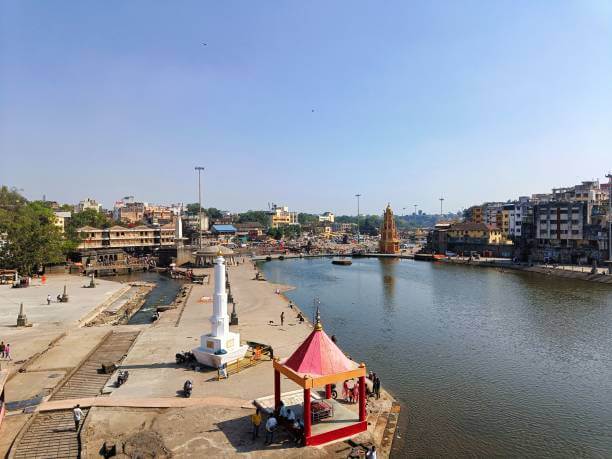
Panchavati in Nashik is one of the most sacred and spiritually vibrant destinations in India. Revered for its deep connection with the Ramayana, ancient sages, holy rivers, and timeless Hindu traditions, Panchavati is not merely a place to visit—it is an experience that touches the soul. Located on the banks of the sacred Godavari River, This holy land along the Godavari attracts devotees, spiritual seekers, pilgrims, and heritage travelers throughout the year.
This comprehensive guide explores the mythological importance, spiritual significance, major attractions, sacred rituals, best time to visit, pilgrimage value, and spiritual experiences of Panchavati, Nashik, making it a complete resource for devotees and spiritual travelers.
🌿 What Is Panchavati?
The word Panchavati originates from Sanskrit, meaning “the sacred grove of five banyan trees.” According to ancient Hindu scriptures and the Ramayana, this holy land was once adorned with five divine banyan trees, beneath which great sages performed meditation and spiritual practices. These trees symbolized stability, wisdom, and protection—qualities deeply associated with spiritual growth and divine shelter.
It is believed that Lord Rama, along with Sita Mata and Lakshman, chose Panchavati as their place of residence during a significant phase of their exile. The peaceful environment, spiritual vibrations, and proximity to the sacred Godavari River made Panchavati an ideal location for contemplation, dharma, and righteous living. The presence of these divine personalities transformed the region into a powerful center of devotion and spiritual energy.
Geographically, Panchavati is located near the historic city of Nashik in Maharashtra, forming the spiritual and cultural heart of the region. Over centuries, it has evolved into a sacred landscape dotted with ancient temples, holy ghats, ashrams, caves, and sacred water bodies, each carrying its own mythological and spiritual importance.
Even today, Panchavati retains a calm, devotional atmosphere that sets it apart from ordinary pilgrimage sites. The gentle flow of the Godavari, the sound of temple bells, chanting of mantras, and the presence of seekers and pilgrims create an environment conducive to inner reflection and spiritual connection.
Panchavati is not merely remembered as a historical or mythological place—it continues to live as a spiritual sanctuary, where faith, tradition, and timeless wisdom come together. For devotees, it represents divine presence; for seekers, it offers silence and clarity; and for travelers, it reveals the soul of India’s ancient spiritual heritage.
📜 Mythological Significance of This holy land along the Godavari
📖 Panchavati and the Ramayana
Panchavati holds a central place in the Ramayana, one of India’s greatest epics. It is believed that:
- Lord Rama, along with Sita Mata and Lakshman, lived in Panchavati during their 14-year exile
- Sage Agastya advised Lord Rama to settle here due to its peaceful and spiritually charged environment
- The region witnessed key events such as Surpanakha’s encounter with Lakshman and Ravana’s abduction of Sita
These events make Panchavati one of the most emotionally and spiritually significant Ramayana sites in India.
🔱 Spiritual Importance of This holy land along the Godavari, Nashik
This holy land along the Godavari is considered a land of tapasya (penance) where sages and saints performed intense meditation. The presence of the Godavari River enhances its sanctity, making it a powerful destination for:
- Spiritual purification
- Meditation and self-reflection
- Ancestral rituals
- Liberation-focused practices
Pilgrims believe that prayers offered in This holy land along the Godavari carry special spiritual merit and bring peace, clarity, and blessings.
🛕 Major Places to Visit in Panchavati
Panchavati is a sacred landscape where mythology, devotion, and living tradition come together. Each place here is deeply connected to the Ramayana, ancient sages, and the eternal flow of the Godavari. Visiting these sites is not just about seeing monuments—it is about experiencing divine presence and spiritual continuity.
🕳️ 1. Sita Gufa – The Sacred Abode of Sita Mata
Sita Gufa is one of the most emotionally powerful and spiritually significant places in Panchavati. It is believed to be the spot where Sita Mata stayed during the exile and from where Ravana abducted her, an event that changed the course of the Ramayana.
The cave is small and narrow, requiring devotees to bend slightly while entering—an act that naturally encourages humility and surrender. Inside, beautifully adorned idols of Lord Rama, Sita Mata, and Lakshman create an atmosphere filled with devotion and reverence.
Standing inside Sita Gufa, devotees often feel a deep emotional connection, as if the events of the Ramayana are still alive. The silence of the cave, combined with faith, makes it a place for introspection, prayer, and heartfelt devotion.
🕉️ 2. Kapaleshwar Mahadev Temple – A Unique Shrine of Lord Shiva
The Kapaleshwar Mahadev Temple holds a special place among Shiva temples in India. It is one of the rare temples where Nandi, the sacred bull of Lord Shiva, is absent, symbolizing a unique spiritual belief and mythological event.
According to legend, Lord Shiva performed intense penance here to free himself from Brahma Hatya dosha. As a result, the temple is considered extremely powerful for karmic purification, mental peace, and relief from inner burdens.
Devotees visit Kapaleshwar Temple to seek:
- Release from past karmic effects
- Calmness of mind and emotional balance
- Spiritual strength during difficult phases
The serene atmosphere of the temple encourages silent prayer and deep reflection.
🌊 3. Ramkund – The Sacred Ghat of Liberation
Ramkund is the spiritual heart of This holy land along the Godavari and one of the most sacred ghats on the Godavari River. It is believed that Lord Rama bathed here, sanctifying the waters forever. Due to this divine association, Ramkund holds immense importance for rituals and ancestral ceremonies.
Today, Ramkund serves as a major center for:
- Ritual baths for purification
- Shraddha and Pind Daan for ancestors
- Sacred ceremonies during Kumbh Mela
From early morning till late evening, the ghat remains vibrant with priests chanting mantras, devotees offering prayers, and pilgrims taking holy dips. Despite the activity, Ramkund carries a powerful sense of peace and sacredness, making it a place of both devotion and liberation.
🛕 4. Kalaram Temple – A Majestic Shrine of Lord Rama
The Kalaram Temple is one of the most prominent spiritual landmarks in Nashik and Panchavati. Dedicated to Lord Rama, the temple is famous for its black stone idol, from which it derives its name.
Built in the 18th century, the temple stands as an architectural and devotional marvel. Beyond its spiritual significance, Kalaram Temple also holds historical importance due to its association with social reform movements, symbolizing equality and spiritual unity.
Devotees visiting Kalaram Temple seek:
- Strength in dharma
- Family harmony
- Blessings for righteous living
The temple’s calm surroundings and devotional atmosphere make it an essential stop in Panchavati.
🌊 5. Godavari River Ghats – The Lifeline of Spiritual Energy
The sacred Godavari River flows gently through Panchavati, nourishing both the land and the spirit. Considered one of the holiest rivers in India, the Godavari is believed to wash away sins, cleanse negative karma, and restore inner balance.
The ghats along the river provide serene spaces for:
- Meditation and silent reflection
- Daily prayers and offerings
- Observing rituals and aartis
Sitting by the river, listening to flowing water and distant temple bells, many devotees experience a deep sense of stillness and spiritual reassurance. The Godavari in Panchavati is not just a river—it is a living symbol of purity, continuity, and divine grace.
Together, these sacred places make Panchavati a complete spiritual circuit, where devotion, history, and inner awakening merge seamlessly. Visiting them is a journey through faith, mythology, and timeless wisdom.r, and silent reflection.
🪔 Panchavati and Ancestral Rituals
Panchavati holds a deeply revered place in Hindu tradition for performing ancestral rituals such as Shraddha, Tarpan, and Pind Daan. Situated on the sacred banks of the Godavari River, this holy land is believed to be especially powerful for honoring forefathers and resolving ancestral karmic bonds.
For centuries, families from across India have traveled to Panchavati to perform these rites with devotion, guided by learned priests who follow authentic Vedic traditions. The spiritual energy of the place, combined with the sanctity of the Godavari, creates an ideal environment for connecting with departed souls.
According to belief, rituals performed in Panchavati help:
- Relieve ancestral disturbances (Pitru Dosha) that may be affecting the family
- Remove generational obstacles, such as repeated struggles in health, marriage, or finances
- Bring peace and liberation to departed souls, allowing them to progress on their spiritual journey
- Restore harmony and blessings within the family lineage
Ramkund and nearby ghats are especially significant for these ceremonies, as it is believed that Lord Rama himself performed ancestral rites here. Performing Shraddha and Pind Daan in such a sacred setting is said to strengthen the bond between generations—past, present, and future.
Beyond ritual significance, many devotees experience a deep sense of emotional relief and spiritual closure after completing ancestral ceremonies in Panchavati. The flowing Godavari, chanting of mantras, and serene surroundings together create a powerful atmosphere of purification, gratitude, and peace.
For those seeking to honor their ancestors with sincerity and devotion, Panchavati offers not just a ritual destination, but a sacred space for healing ancestral karma and receiving divine grace.
🌺 Panchavati During Kumbh Mela
Nashik is one of the four sacred cities where the Kumbh Mela is celebrated, and during this divine period, Panchavati becomes the spiritual epicenter of the entire region. Rooted in ancient scriptures, the Kumbh Mela is considered the greatest congregation of faith on earth, and Panchavati plays a central role in its sacred observances.
During Kumbh Mela, millions of devotees, saints, akharas, and spiritual seekers from across India and the world gather in Panchavati to take holy dips in the Godavari River, especially at Ramkund and nearby ghats. These ritual baths are believed to cleanse sins, purify the soul, and accelerate spiritual liberation.
The atmosphere of Panchavati during Kumbh Mela is extraordinary:
- Continuous chanting of Vedic mantras
- Processions of saints and Naga sadhus
- Spiritual discourses, bhajans, and kirtans
- Temples illuminated with lamps and devotion
- A deep sense of unity beyond caste, language, or region
The spiritual energy during this time is intense and transformative. Panchavati turns into a living ocean of faith, devotion, and collective consciousness, where individual identities dissolve into a shared spiritual purpose.
For many pilgrims, visiting Panchavati during Kumbh Mela is a once-in-a-lifetime experience—a moment to reconnect with dharma, seek blessings, and feel the timeless power of Sanatan tradition in its purest form.
Even after the Mela concludes, the sacred vibrations linger, reminding visitors that Panchavati is not just a place—it is a continuous spiritual movement shaped by centuries of devotion.
📅 Best Time to Visit Panchavati
Panchavati is a timeless spiritual destination that welcomes devotees and travelers throughout the year. However, certain seasons and occasions enhance the overall experience by offering pleasant weather, heightened spiritual energy, and vibrant religious celebrations.
🌤️ October to March – Ideal for Pilgrimage & Sightseeing
The months from October to March are considered the most comfortable time to visit Panchavati. The weather remains cool and pleasant, making it ideal for:
- Visiting temples and ghats
- Walking through sacred sites
- Performing rituals without heat fatigue
- Exploring nearby spiritual landmarks in Nashik
This period is especially suitable for families, elderly pilgrims, and first-time visitors seeking a peaceful and comfortable spiritual journey.
🕉️ Shravan Month – Most Auspicious for Shiva Devotees
The holy month of Shravan (July–August) holds immense significance in Panchavati, particularly due to its proximity to Trimbakeshwar Jyotirlinga and other Shiva temples. During this time:
- Devotees observe fasts and offer sacred water to Lord Shiva
- Temples resonate with continuous chanting and bhajans
- Mondays (Shravan Somvar) draw large gatherings of devotees
Visiting Panchavati during Shravan allows devotees to experience heightened devotion, divine energy, and spiritual discipline.
🌸 Ram Navami – Celebration of Lord Rama
Ram Navami, marking the birth of Lord Rama, is celebrated with great enthusiasm in Panchavati, as the region is deeply connected to the Ramayana. During this festival:
- Temples are beautifully decorated
- Special prayers, kirtans, and processions take place
- Devotees relive the divine presence of Lord Rama
For followers of Lord Rama, this is one of the most spiritually rewarding times to visit Panchavati.
🌅 Best Time of Day – Early Morning & Evening
Regardless of the season, early morning and evening hours offer the most peaceful and spiritually uplifting experience in Panchavati.
- Early mornings provide calm surroundings, soft temple bells, and serene river views—ideal for meditation and prayer.
- Evenings come alive with aartis, lamps glowing along the ghats, and devotional chants, creating a deeply soothing atmosphere.
✨ Spiritual Tip
If your purpose is rituals, meditation, or ancestral ceremonies, plan your visit during auspicious dates and arrive early in the day to fully absorb the spiritual essence of Panchavati.
Overall, Panchavati offers a unique spiritual experience in every season—each time revealing a different layer of devotion, tradition, and inner peace. Choosing the right time enhances not just your visit, but your connection with this sacred land.g hours offer the most peaceful spiritual experience.
🚗 How to Reach Panchavati, Nashik
By Road
Nashik is well connected by road from Mumbai, Pune, and other major cities. Panchavati lies within the city and is easily accessible.
By Rail
Nashik Road Railway Station connects the city to major Indian destinations. From there, local transport can be used to reach Panchavati.
By Air
The nearest airport is Nashik (Ozar) Airport, with better connectivity via Mumbai.
✅ Tips for Pilgrims Visiting Panchavati
- Wear modest and comfortable clothing
- Visit temples early morning to avoid crowds
- Maintain silence near ghats and temples
- Avoid using soap or chemicals in the river
- Respect local customs and temple rule
✨ Why Panchavati Is a Must-Visit Spiritual Destination
Panchavati is not merely a geographical location—it is a living, breathing chapter of India’s spiritual heritage. This sacred land carries the vibrations of devotion accumulated over thousands of years. Every stone pathway, river ghat, ancient tree, and temple wall silently narrates stories of faith, sacrifice, penance, and divine intervention.
Here, mythology is not confined to scriptures—it is felt in the air. The banks of the Godavari echo with the footsteps of sages, the prayers of devotees, and the timeless presence of Lord Rama, Sita, and Lakshman. Panchavati invites visitors to pause, reflect, and reconnect with values that transcend time—truth, humility, surrender, and inner strength.
For pilgrims, Panchavati is a place to seek blessings, perform sacred rituals, and find solace in divine grace.
For spiritual seekers, it offers silence, introspection, and an opportunity to turn inward.
For travelers and mythology enthusiasts, it presents an authentic encounter with India’s epic traditions and living culture.
What truly sets Panchavati apart is its ability to touch the heart quietly. Without grand proclamations, it offers a sense of belonging, peace, and spiritual reassurance—making every visit deeply personal and profoundly fulfilling.
❓ Frequently Asked Questions (FAQs) – Visiting Panchavati
1️⃣ Can Panchavati be visited throughout the year?
Yes, Panchavati remains open to devotees and visitors all year round. Since it is a living spiritual center with temples, ghats, and rituals happening daily, pilgrims can visit anytime. However, weather conditions and festivals may influence the overall experience.
2️⃣ Which months are best for a peaceful visit to Panchavati?
The period from October to March is considered ideal due to pleasant weather. These months are comfortable for temple visits, walking along the Godavari ghats, and spending time in meditation without extreme heat or monsoon interruptions.
3️⃣ Is Shravan month a good time to visit Panchavati?
Yes, the Shravan month is especially auspicious, particularly for devotees of Lord Shiva. Panchavati experiences heightened spiritual energy during this time, with regular abhishek rituals, fasting observances, and devotional chanting in temples.
4️⃣ What makes Ram Navami special in Panchavati?
Ram Navami holds deep significance because Panchavati is closely linked to the Ramayana. The festival is celebrated with great devotion, temple decorations, special prayers, and spiritual programs, making it an ideal time for followers of Lord Rama.
5️⃣ What is the best time of day to visit Panchavati?
Early morning and evening hours are considered the most peaceful. Morning visits offer calm surroundings and ideal conditions for prayer and rituals, while evenings are spiritually uplifting with aartis, temple bells, and illuminated ghats.
6️⃣ Is Panchavati suitable for senior citizens and families?
Yes, Panchavati is suitable for visitors of all ages. Most major temples and ghats are easily accessible, and the area has a calm, devotional environment. Visiting during cooler months is recommended for elderly pilgrims.
7️⃣ Can ancestral rituals be performed at any time of the year in Panchavati?
Yes, ancestral rituals like Shraddha, Tarpan, and Pind Daan can be performed throughout the year. However, many families prefer auspicious dates or specific lunar periods for these ceremonies, guided by local priests.
8️⃣ Does Panchavati get crowded during festivals?
Yes, Panchavati experiences heavy crowds during major festivals such as Kumbh Mela, Shravan Mondays, and Ram Navami. Visitors seeking a quieter experience should plan visits during weekdays or early morning hours.
9️⃣ How much time is needed to explore Panchavati?
A half-day is sufficient to visit the main temples and ghats. However, devotees who wish to attend rituals, meditate, or explore nearby sacred sites may prefer to spend a full day or more.
🔱 Spiritual Note
No matter when you visit, Panchavati offers a unique spiritual atmosphere shaped by centuries of devotion. Choosing the right time simply enhances comfort and depth of experience.
🌸 Conclusion – A Journey That Transforms Within
A journey to Panchavati, Nashik is not just a physical pilgrimage; it is a journey inward. Rooted deeply in the sacred narrative of the Ramayana, energized by the eternal flow of the Godavari River, and sanctified by centuries of devotion and tapasya, Panchavati continues to awaken faith and spiritual awareness in all who visit.
This sacred land teaches that spirituality does not demand escape from life—it invites awareness within life. Walking through Panchavati reminds us that divinity exists not only in temples but also in silence, simplicity, and sincere remembrance.
Visiting Panchavati is not about sightseeing alone. It is about:
- Connecting with timeless wisdom
- Honoring ancient divine traditions
- Experiencing inner stillness amidst the flow of life
May your visit to Panchavati bring peace to your mind, clarity to your path, and blessings to your life.
May the sacred energies of this holy land guide you toward balance, faith, and inner awakening. 🙏ce, clarity, and blessings into your life.