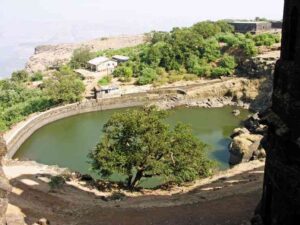

Someshwar Mahadev Mandir Nashik: The Moon God’s Temple on the Godavari, and Why Trimbakeshwar Pilgrims Often Stop Here Too
About half an hour outside central Nashik, where the Godavari River slows down and widens near Gangapur Road, there’s a temple most tourist itineraries mention only in passing — usually squeezed between “boating” and “sunset point” on a list of things to do near the city. That undersells it considerably. Someshwar Mahadev Mandir Nashik is one of the oldest functioning Shiva shrines in the region, and for devotees who are already planning a Rahu-Ketu or Kaal Sarp Dosh puja at Trimbakeshwar, just 27 kilometres away, it’s worth understanding as more than a scenic stopover.
The name itself is the first clue to why. “Someshwar” comes from two Sanskrit words — Soma, meaning the moon, and Ishwar, meaning lord. Someshwar Mahadev is, quite literally, Shiva as the Lord of the Moon. That single detail turns out to matter a great deal if you know even a little Vedic astrology, and we’ll come back to it.
A Temple Older Than Most Records of It
Ask five different sources when Someshwar Mahadev Mandir Nashik was actually built, and you’ll get five different answers — some point to the Chola period, others to the Peshwa era of Maharashtra in the 18th century, when much of Nashik’s temple architecture as we see it today was renovated or rebuilt under Peshwa patronage. What’s consistent across nearly every account is the legend attached to the site, not just the masonry: it’s said that the Godavari River itself had run dry in this stretch until Lord Shiva, in his Someshwar form, intervened and restored its flow. Whether read as literal history or as a way of saying the river’s presence here is sacred and not incidental, it’s a detail that gives the temple’s location — right on the riverbank — a different weight than “scenic spot.”
There’s a second, less commonly told association: local tradition holds that Lord Rama, Sita, and Lakshman rested in this area during their years of exile, before their more widely known stay at Panchavati closer to the city centre. It’s a quieter claim than the famous Sita Gufa story, and you won’t find it repeated on most travel sites, but it’s part of why some older Nashik families still treat this stretch of the Godavari as sacred ground independent of the temple itself.
Why “Someshwar” — Lord of the Moon — Matters Astrologically
This is the part most visitor guides skip entirely, and it’s worth slowing down for if you’re the kind of devotee who thinks about your kundali as much as your itinerary.
In Vedic astrology, the Moon (Chandra) governs the mind, emotions, and inner stability. It’s also one of the planets most directly affected when Rahu or Ketu — the two shadow points responsible for Kaal Sarp Dosh — sit close to it in a birth chart. A Chandra afflicted by Rahu is a well-documented pattern behind restlessness, anxiety, and disturbed sleep, symptoms that overlap closely with what devotees often describe when they come to Trimbakeshwar asking about Kaal Sarp Dosh Puja or Rahu-Ketu Shanti Puja.
That overlap is exactly why Someshwar Mahadev Mandir Nashik has, for generations, been treated as a meaningful stop for devotees already on a Trimbakeshwar trip. Paying respects to Shiva specifically in his form as Chandra’s lord is considered, in local tradition, to be a complementary gesture alongside a Rahu-Ketu-focused ritual — not a replacement for it, but a way of honouring the planet most closely entangled with the affliction itself.
What a Visit Actually Feels Like
Photographs of the temple tend to capture the structure — plain, unadorned stone, more solid than ornate — but they miss the sound of the place, which is really what stays with most visitors. Early mornings bring the low murmur of “Om Namah Shivaya” mixed with birdsong and the occasional splash from the river; there’s a working boating point just downstream, and by mid-morning it’s not unusual to hear children laughing on the water within earshot of the sanctum. It’s an odd, pleasant contradiction for a temple this old — genuinely devotional in one breath, genuinely recreational in the next.
Inside, alongside the central Shiva Lingam, stands a Hanuman idol, which is part of why some devotees describe this as a temple that quietly serves two traditions at once — Shaiva and Vaishnava — without making a production of it either way.
The temple grounds themselves are unhurried. Wide steps lead down to the water, tall trees offer shade on even the hottest Nashik afternoons, and a small waterfall nearby adds a second, gentler sound beneath the temple bells. None of this requires an entrance fee or a guide to appreciate — it’s the kind of place that rewards simply sitting still for twenty minutes longer than you planned to.
Festivals: Mahashivratri and the Shravan Somvars
Two occasions bring noticeably larger crowds to this temple. Mahashivratri turns the temple into an all-night gathering — milk abhishekam, Rudrabhishekam, and continuous bhajans that carry on well past midnight, drawing devotees from across the district. The second is Shravan, particularly its four Somvars (Mondays), when fasting devotees arrive steadily through the day, many treating the visit as one stop in a broader Shravan circuit that also includes Trimbakeshwar itself.
If your own Shravan or Nag Panchami travel plans already include a puja booking at Trimbakeshwar — Kaal Sarp Dosh, Pitru Dosh, Rahu-Ketu Shanti, or Mahamrityunjay Jaap — this is genuinely one of the more natural detours to build into the same trip, precisely because of the shared Shravan significance and the short driving distance between the two sites.
Getting Between Someshwar and Trimbakeshwar
Someshwar Mahadev Mandir Nashik sits on Gangapur Road, roughly 7 to 8 kilometres from central Nashik. Trimbakeshwar, by comparison, is about 27 kilometres from Someshwar — a drive of around 33 minutes on a reasonably clear road. For pilgrims coming from outside Maharashtra, this means a single base in Nashik city can realistically cover both sites without the trip feeling rushed: an early Trimbakeshwar puja, followed by an unhurried afternoon at Someshwar on the way back, or the reverse, depending on your puja’s muhurat timing.
By road, auto-rickshaws and taxis run both routes easily. The nearest railway station to either site is Nashik Road, and the nearest airport is Nashik’s Ozar Airport, with Mumbai’s Chhatrapati Shivaji Maharaj International Airport as the more frequently used option for travellers coming from further afield.
Temple Timings
The temple generally keeps morning hours from around 5:00 AM to 12:00 PM and reopens in the evening from roughly 4:00 PM to 9:00 PM, though these can shift slightly around major festival dates. Early morning and just after sunset are, by most accounts, the two calmest windows to visit — before the boating crowds arrive, or after they’ve thinned out for the day.
Puja Rituals You Can Perform at Someshwar Mahadev Mandir
Unlike Trimbakeshwar, where remedial pujas like Kaal Sarp Dosh or Rahu-Ketu Shanti follow an elaborate, Purohit-led Vedic procedure, worship at Someshwar tends to be simpler and largely self-directed. Most devotees carry bilva leaves, a small quantity of milk, water, and fresh flowers, and perform a basic abhishek on the Shiva Lingam themselves, chanting “Om Namah Shivaya” as they pour. There’s no requirement to book a priest in advance for this — the temple’s own attending pandits are generally available to guide first-time visitors through the sequence if asked, but a quiet, self-led ritual is just as accepted here.
Some devotees also choose to sit by the Godavari afterward and offer a short prayer for their ancestors, given the river’s broader association with pitru-related rituals across Nashik (Ramkund, a short drive away, is the more formal site for this specific purpose). It’s a good example of how the temple works on two registers at once — a place for a five-minute stop on the way to somewhere else, and equally a place worth spending an unhurried hour if your schedule allows it.
The Best Time of Year to Go
Winter mornings, from around November through February, tend to be the most comfortable time to visit — cool air off the river, thinner crowds outside of festival dates, and clear light for anyone hoping to photograph the temple against the Godavari. Monsoon months bring a different kind of beauty: the river runs fuller, the surrounding greenery turns a deeper shade, and the nearby waterfall is at its most dramatic, though the boating activities are sometimes suspended during heavy rain for safety reasons. Summer visits are best kept to early morning, well before the heat sets in around midday.
A Word on the Wider Nashik Circuit
Someshwar isn’t an isolated stop. It sits within a loose cluster of sacred sites along and near the Godavari — Ramkund, associated with ancestral rituals and Asthi Visarjan; Kapaleshwar Mahadev, notable for being one of the rare Shiva temples without a Nandi idol; and the Rama-linked sites of Panchavati closer to the city. Most pilgrims treat these as a half-day circuit on their own, separate from a Trimbakeshwar visit, given the driving distances involved.
Frequently Asked Questions
Where exactly is Someshwar Mahadev Mandir Nashik located?
It’s on Gangapur Road, on the banks of the Godavari River, about 7 to 8 kilometres from central Nashik.
What does the name “Someshwar” mean?
“Someshwar” combines Soma (moon) and Ishwar (lord), meaning Lord Shiva in his form as the ruler of the moon.
How far is the temple from Trimbakeshwar?
The driving distance is approximately 27 kilometres, taking around 33 minutes, which makes it a realistic same-day addition to a Trimbakeshwar puja visit.
Is there an astrological reason to visit Someshwar alongside a Kaal Sarp Dosh or Rahu-Ketu puja at Trimbakeshwar?
Many devotees consider it complementary. Since the Moon is closely linked to Rahu-Ketu afflictions in a birth chart, paying respects to Shiva as Chandra’s lord at Someshwar is regarded as a fitting addition to a Rahu-Ketu Shanti Puja or Kaal Sarp Dosh Puja performed at Trimbakeshwar, though it isn’t a substitute for the puja itself.
What are the temple timings?
Generally 5:00 AM to 12:00 PM in the morning and 4:00 PM to 9:00 PM in the evening, with slight variations during festivals.
Which festivals draw the largest crowds here?
Mahashivratri and the four Shravan Somvars see the highest footfall, with devotees often combining a visit here with the wider Shravan pilgrimage circuit around Nashik and Trimbakeshwar.
Can I combine a Someshwar visit with booking a puja at Trimbakeshwar?
Yes. Given the short driving distance, many pilgrims schedule their Kaal Sarp Dosh Puja, Pitru Dosh Puja, Rahu-Ketu Shanti Puja, or Mahamrityunjay Jaap at Trimbakeshwar earlier in the day and visit Someshwar afterward, or plan it the other way depending on their puja’s muhurat.
Planning a Trimbakeshwar visit that includes a stop at Someshwar Mahadev Mandir Nashik? Contact us to book your Kaal Sarp Dosh Puja, Pitru Dosh Puja, Rahu-Ketu Shanti Puja, or Mahamrityunjay Jaap with a verified, authorised pandit, and we’ll help you plan the timing around both sites.