Mahashivratri Puja in Nashik: 7 Powerful Reasons to Visit
A family from Surat once told us they’d celebrated Mahashivratri at home for fifteen years before finally making the trip to Nashik. Their question afterward stuck with us: “Why did nobody tell us it feels this different here?”
It’s a fair question, and the honest answer isn’t mystical — it’s geographical and historical. Trimbakeshwar isn’t just another Shiva temple hosting a festival. It sits at the exact spot where the Godavari river is believed to originate, inside one of only twelve Jyotirlingas in the country, in a temple town built specifically around this one night more than any other. That combination doesn’t exist anywhere else, which is why Mahashivratri Puja in Nashik carries a weight that’s hard to describe until you’ve stood in the crowd yourself.
Why the Location Itself Is Part of the Ritual
Most articles about Mahashivratri jump straight into fasting rules and mantras. We want to start somewhere different — the actual ground beneath Mahashivratri Puja in Nashik, and why it matters more than most guides admit.
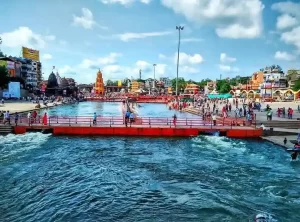
Trimbakeshwar sits at the base of the Brahmagiri hills, about 28 kilometres from Nashik city. According to the story devotees still tell here, Sage Gautama performed years of penance on this hill to end a severe drought, and Lord Shiva agreed to let the Ganga flow down in the form of the Godavari as a result. The Kushavart Kund, the sacred pond inside the temple complex, is considered the symbolic source of that river — the second-longest in India, worshipped here as the Ganga of the South.
Then there’s the Jyotirlinga itself, which is genuinely unlike the other eleven. The Trimbakeshwar linga has three faces representing Brahma, Vishnu, and Shiva together — the only one of the twelve built around this trinity rather than Shiva alone. On an ordinary day, that detail is remarkable. On Mahashivratri, when the belief is that Shiva’s presence is at its most intense here, it becomes the reason thousands of families specifically choose this temple over any other.
Seven Reasons This Night Feels Different Here
These are the reasons families keep giving us when we ask why they chose Mahashivratri Puja in Nashik over a temple closer to home.
1. You’re Standing Where the River Begins
There’s something that shifts in people when they realise the water flowing past them isn’t just a river — it’s the Godavari at its origin point, the same water that irrigates half of Maharashtra downstream. Taking a holy dip at Kushavart Kund on Mahashivratri is one of the most requested experiences among visiting families, and it’s genuinely unlike bathing in the river anywhere else along its course.
2. The Temple Town Doesn’t Sleep
Unlike city temples where the crowd thins after evening aarti, Trimbak town stays fully awake through the night on Mahashivratri. Stalls stay open, chanting continues in waves from different corners of town, and the entire settlement — not just the temple — participates in Jagaran. It’s less a single event and more an entire town holding vigil together.
3. Every Twelve Years, It Becomes Something Even Bigger
Trimbakeshwar hosts the Sinhastha Kumbh Mela once every twelve years — one of the largest religious gatherings on earth, second only to the Kumbh at Prayagraj. Mahashivratri falling in a Kumbh year turns Mahashivratri Puja in Nashik into one of the most significant spiritual convergences in the country, drawing pilgrims who plan the trip years in advance.
4. The Puja Options Go Beyond a Single Ritual
Because of Trimbakeshwar’s standing among the Jyotirlingas, families planning Mahashivratri Puja in Nashik often combine the festival observance with a specific puja they’ve been planning — Kaal Sarp Dosh Puja for Rahu-Ketu related obstacles, Rudrabhishek for purification, or Pitru Shanti rituals for ancestral peace. Few other Shiva temples in India offer this range of Vedic remedies performed by trained pandits on the same sacred ground.
5. Monday Already Belongs to This Temple
Every Monday at Trimbakeshwar carries its own significance through the Palkhi Sohla, a weekly procession honouring Shiva. When Mahashivratri happens to fall on or near a Monday, families planning Mahashivratri Puja in Nashik say the town’s devotional rhythm and the festival’s energy reinforce each other in a way regular visitors specifically watch the calendar for.
6. The Brahmagiri Hills Change the Whole Atmosphere
Physically, Mahashivratri Puja in Nashik doesn’t feel like a festival happening in a city — it feels like one happening inside a landscape. The hills surrounding the temple, cooler air, and proximity to forest make the whole experience quieter and more contemplative than urban celebrations, even with thousands of people present.
7. It Connects You to a 300-Year-Old Continuity
The current Trimbakeshwar temple structure was built in the 18th century by Peshwa Balaji Baji Rao, and the rituals performed here — the same Rudra chants, the same Abhishekam sequence — have continued largely unbroken since. Standing in that line of continuity on the one night considered most significant to Shiva worship is part of what visiting families describe as the deeper pull of coming here specifically, rather than observing the festival elsewhere.
What an Actual Night Here Looks Like
If you’re planning Mahashivratri Puja in Nashik for the first time, here’s the realistic picture rather than the postcard version. The temple opens for Antaralaya Abhishek early morning, and puja timings run through the day, with the biggest crowds building from late afternoon into the night. Expect security checks, long but moving queues, and a genuinely festive atmosphere in the town outside the temple — food stalls, bhajan groups, families camped along the streets waiting for their turn.
If darshan queues aren’t your priority and a specific puja is, it’s worth booking your Rudrabhishek, Kaal Sarp Dosh Puja, or Mahamrityunjay Puja in advance rather than trying to arrange it on the day itself for Mahashivratri Puja in Nashik, since pandit availability gets stretched thin during the festival rush.
Pairing Mahashivratri With a Specific Puja
A large share of the families who plan Mahashivratri Puja in Nashik aren’t only coming for darshan — they’re timing a specific remedy around this night because Shiva’s energy is considered strongest here on Mahashivratri, and Trimbakeshwar’s pandits are experienced in performing these rituals back-to-back with the festival observance.
Kaal Sarp Dosh Puja is one of the most requested pairings. Since Shiva is regarded as the controller of time and destiny, Mahashivratri is considered an especially potent window to address a Kaal Sarp Dosh — the placement pattern where Rahu and Ketu box in every other planet in a birth chart. Families dealing with repeated delays in marriage, career stagnation, or a string of unexplained setbacks often choose this exact night for the ritual, believing the combination of the festival’s energy and Trimbakeshwar’s significance strengthens the puja’s effect.
Mahamrityunjay Puja is the second most common pairing, particularly among families managing a serious illness or a recent health scare. Because the mantra itself is dedicated to Shiva, performing it on the night considered most sacred to him — inside a temple built around the Godavari’s origin — carries an added weight for people already leaning on this puja during a difficult time.
Rahu-Ketu Shanti Puja rounds out the three most-booked rituals during the festival. This puja addresses the Rahu-Ketu axis directly, without necessarily requiring the full Kaal Sarp Dosh pattern, and is often chosen by families dealing with sudden reversals, anxiety, or a Mahadasha period that’s proving difficult to navigate.
If you’re planning to combine any of these with your visit, book ahead — pandit slots for all three fill up quickly as Mahashivratri approaches, and walking in on the day itself usually means a long wait or no slot at all.
Getting There from Nashik
For anyone planning Mahashivratri Puja in Nashik from out of state, Trimbakeshwar is roughly 40 minutes to an hour from Nashik Road by car, and shared taxis run regularly from Nashik city on festival days, though they fill up fast closer to the evening. If you’re travelling from outside Maharashtra, Nashik Road railway station and Ozar Airport are the usual entry points, with Trimbakeshwar as the onward leg. On Mahashivratri itself, traffic into Trimbak town slows considerably after midday, so an early start is worth the effort if you want to avoid several hours stuck on the approach road.
A Simpler Way to Observe It, If You Can’t Travel
Not everyone can make the trip, and that’s alright. The core of Mahashivratri — fasting, chanting Om Namah Shivaya, staying alert and reflective through the night — holds meaning wherever you are. What Mahashivratri Puja in Nashik adds isn’t a requirement, it’s a depth of setting: the actual river origin, the actual Jyotirlinga believed to be self-manifested, the actual town that has organised itself around this one night for centuries. If you can visit even once, most families say it changes how the festival feels every year after, even when observed at home.
A Few Honest Answers
Is Mahashivratri Puja in Nashik very crowded? Yes, significantly, especially in the evening and through the night. If you want a calmer experience, early morning darshan before the crowds peak is the better window.
Do I need to book a puja in advance, or can I arrange one on arrival? Advance booking is strongly recommended for Mahashivratri specifically. Walk-in puja requests are possible but far less reliable given how many families are visiting that day.
Is the Kushavart Kund dip safe and open to everyone? Yes, it’s open to the public and considered an important part of the visit, though it does get crowded — going early in the day is more comfortable than the evening rush.
How is this different from celebrating Mahashivratri at a local temple? The core rituals are the same everywhere. What’s different in Nashik is the setting — the Godavari’s origin point, the three-faced Jyotirlinga, and a temple town built specifically around this festival, which many visitors describe as adding a layer of meaning that’s hard to find elsewhere.
Can I combine Mahashivratri with a Kaal Sarp Dosh Puja or Mahamrityunjay Puja? Yes, this is one of the most common reasons families choose Mahashivratri Puja in Nashik specifically. Kaal Sarp Dosh Puja, Mahamrityunjay Puja, and Rahu-Ketu Shanti Puja can all be booked alongside the festival observance, though advance booking is essential given how busy pandits are on this particular night.
Where This Leaves You
Whether you’re planning your first Mahashivratri Puja in Nashik or you’re a regular visitor trying to time it around the crowds, the heart of it stays the same — a night meant for stillness, reflection, and standing a little closer to something larger than the everyday. If you’d like help booking a puja at Trimbakeshwar for this Mahashivratri, or planning your visit around it, reach out to us directly and we’ll walk you through exactly what to expect.